Critical operating knowledge is concentrated in a few people
One or two people know how the nightly jobs interact, which files are safe to touch, and why a program was patched in 2009. When they retire, the knowledge leaves with them.
We map RPG programs, DB2 for i files, jobs, screens, interfaces, and operator knowledge into a practical modernization sequence without pretending IBM i itself is the problem.
Not written down: which job waits for which
Built from the system, its logs, and its operators
Which capabilities are one retirement away from being unmaintainable?
Where can an API seam expose data without changing RPG?
Which 5250 workflows are worth a modern interface?
What should stay on IBM i indefinitely?
Business rules, integrations, operator knowledge, support clocks, and unknown consumers determine the safest path. We map those constraints before recommending retention, integration, incremental replacement, or retirement.
One or two people know how the nightly jobs interact, which files are safe to touch, and why a program was patched in 2009. When they retire, the knowledge leaves with them.
Batch jobs, file transfers, and data queues form dependencies nobody has drawn. A change in one job can break a downstream process hours later.
IBM i is not the risk. Undocumented programs, single points of knowledge, and closed interfaces are. The map separates the two so investment goes to the right place.
Every engagement ends with a traceable estate view, a prioritized sequence, and explicit uncertainties your team can resolve.
Calls, files, jobs, screens, queues, transfers, and external consumers connected.
Capabilities with concentrated knowledge and fragile operating procedures prioritized.
A sequence for retaining, exposing, improving, or replacing capabilities based on evidence.
The exception path comes before the happy path. Recommendations stay reversible until the evidence supports commitment.
We show you our in-house analysis system, which scans code, repositories, and databases, and agree the estate, the people, and what you will receive.
NDA signed and read-only access granted. Our system runs: data lineage traced, workflows identified, dependencies and consumers mapped.
Engineers verify the findings with your team. Retain, integrate, wrap, replace, or retire: practical paths compared with their tooling.
Architecture, workflows, recommendations, risks, and a timeline with durations, documented and walked through with your decision makers.
Thirty days of read-only discovery and working sessions with your team. You finish with evidence, options, and a roadmap, not a sales proposal.
Start a 30-day assessment Scope: Fixed · Access: Read-only · Output: Written findings you keepApplications, code, data, jobs, interfaces, and the knowledge concentrated in a few people, documented from evidence.
Retain, integrate, wrap, replace, or retire: options per capability with their trade-offs stated plainly.
Where AI-assisted code analysis, test generation, and migration tooling speed the work up, and where they do not.
Release, testing, support, and ownership practices that decide whether a modernization sticks.
A target architecture and a reversible path to it, without betting operations on one cutover weekend.
Phases, durations, dependencies, and decision points your board or steering group can approve.
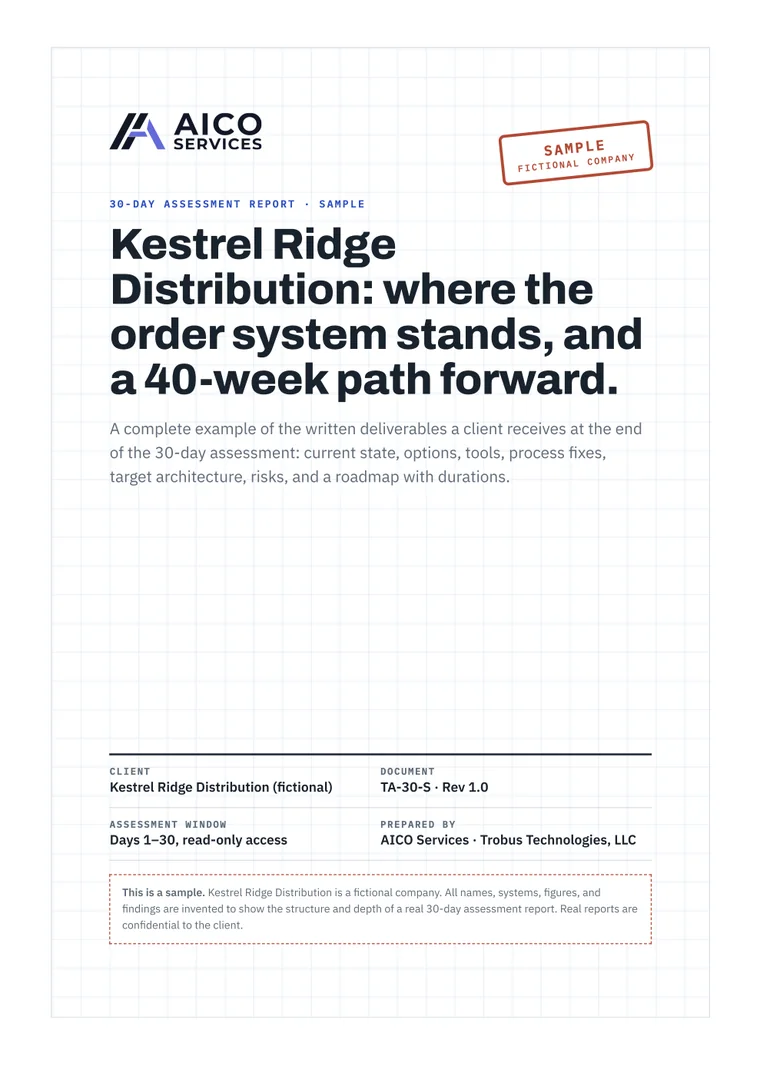
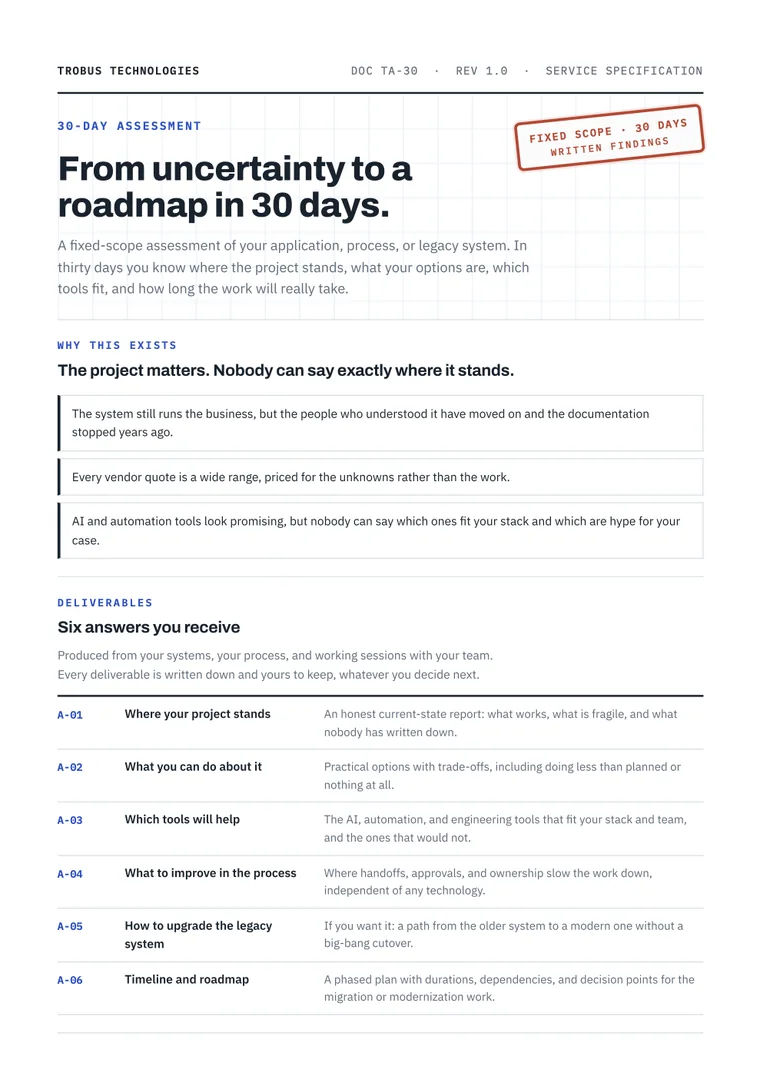
We email you the 2-page specification and a 13-page sample report written for a fictional company: findings, options compared, recommended tools, target architecture, risks, and a 40-week roadmap.
A Maryland-based engineering company. AICO Services is how we package our AI automation, modernization, and assessment work. Our engineers have delivered for organizations including these.





Organizations represented in the broader Trobus Technologies delivery history. Engagement scope and team role vary; reference details are shared where authorized.
Verified credentials maintained by Trobus Technologies, LLC



Bring the estate, the deadline, and the uncertainty. We’ll explain what can be learned safely before a modernization program begins. We will tell you when not to modernize it, and the assessment says so in writing.